
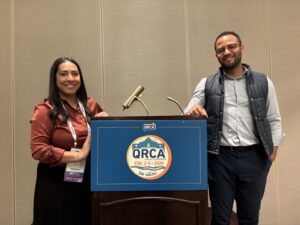
The Curion team shares key takeaways from QRCA 2026
Our team spent last week at the QRCA Annual Conference in San Antonio. QRCA is different from most industry events as it focuses on qualitative researchers getting together to talk about how to do better work.
For four days, Nitasha Ali, Ph.D. and Lawrence Booker spent time walking the floor throughout the conference, attended sessions, joined roundtables, and had conversations about the work we do every day.
Allison Rak's presentation on the "Let Them" theory changed how we think about moderating
The premise is simple: create the right space, then get out of the way. Stop trying to control every moment of the conversation and let participants take you where they need to go. Our role is to set up the environment for insight and then step back, letting go of assumptions, rigid guides, and the need to control what happens next so participants can surface what truly matters.
AI moderation is a key recurring theme
One of the recurring themes across multiple sessions on AI moderation was that while AI can be useful for sensitive or stigmatized topics, it cannot replace the human element in qualitative research. AI may help participants feel more comfortable opening up, but human moderators are still essential for intuitive probing, reading emotional nuance, and adapting in real time.
Sara Bodde's presentation on "Acting for Insights" was immediately practical
She showed how acting techniques can make us better moderators by focusing on three key skills. First is preparation: being aware of our voice, tone, and body language to create a comfortable and engaging presence. Second is listening, recognizing that communication is both verbal and non-verbal and practicing how to listen not just to what is said, but how it is communicated. Third is adapting, since we cannot predict how a session will unfold and need to be ready to respond in the moment.
Why this matters
QRCA gives us great perspectives from other researchers. When you’re running back-to-back studies, you can fall into patterns without realizing it. This conference forces you to step back and evaluate your approach.
The programming covered a wide range. There were “Qual Foundations” sessions for newer researchers on topics like “That’s a Great Question,” “The Basics of AI in Qual Research Prep & Analysis,” and “Smart Starts: The Art and Science of Qual Research Design.” But there were also advanced workshops like “Accessing Participants’ Subconscious Minds,” “The Insight Starts Within: Using Self-Awareness to Elevate your Moderating & Analysis,” and “DIY Your Own Projectives: A How-To Create Your Own Workshop” that gave researchers new tools to work with.
What we're taking forward
Qualitative research requires ongoing learning. We at Curion get better by learning from other people who take the craft seriously. The conference helps us strengthen our qualitative skills, stay aligned with industry best practices, and learn from experienced researchers. All of this helps us design better studies, moderate more effectively, and uncover deeper insights for our clients.