
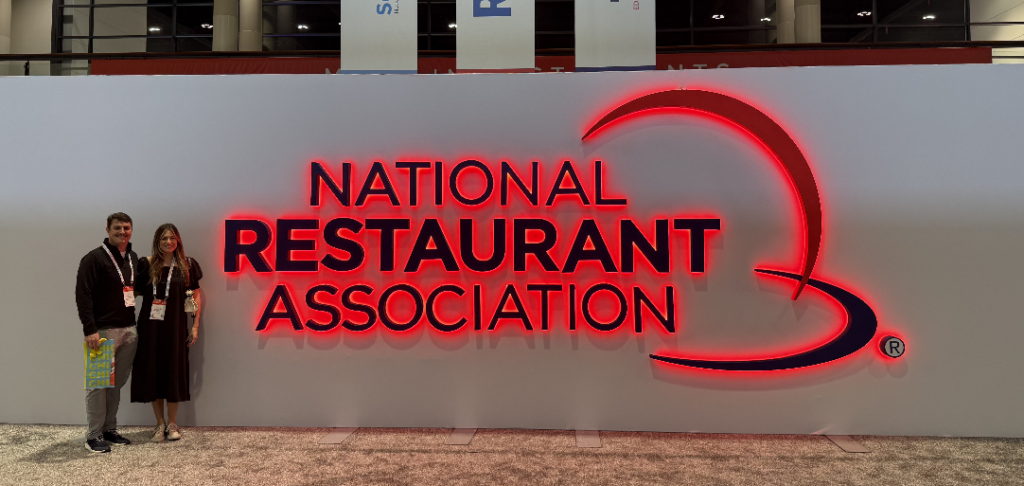
Juliette Dito and Mike Olson recently attended the 2026 National Restaurant Association Show, and shared their insights. One theme stood out immediately: the restaurant industry is no longer cautiously exploring technology, it is actively embedding it into nearly every part of the business.
Walking the show floor, it was impossible to miss how deeply AI, automation, digital ordering, robotics, and data-driven personalization have become central to the foodservice conversation.
Operators are clearly feeling the ongoing pressure of labor shortages, rising operational costs, and tightening margins.
As a result, the industry mindset has shifted decisively.
The question is no longer “Should we modernize?” but rather “How quickly can we implement solutions that genuinely work at scale?”
Technology is Everywhere, but Not for Its Own Sake
From AI-powered ordering systems and autonomous delivery solutions to integrated digital ecosystems designed to streamline kitchen operations, innovation was everywhere. However, what stood out most was not the presence of technology itself, but the intent behind it.
Many of the most compelling solutions were not necessarily the most advanced or visually impressive. Instead, they were the ones designed to reduce friction, for both operators and guests, while preserving operational simplicity.
A consistent message echoed across exhibitors: technology should support hospitality, not replace it.
This distinction is becoming increasingly important. The most successful innovations are those that enhance the guest experience without diluting the human connection that defines foodservice. Whether through faster service, smarter workflows, or more intuitive ordering experiences, the goal is clear; efficiency that still feels personal.
The Rise of Hospitality-Driven Storytelling
Another notable shift was the growing importance of media, content, and storytelling within the industry itself.
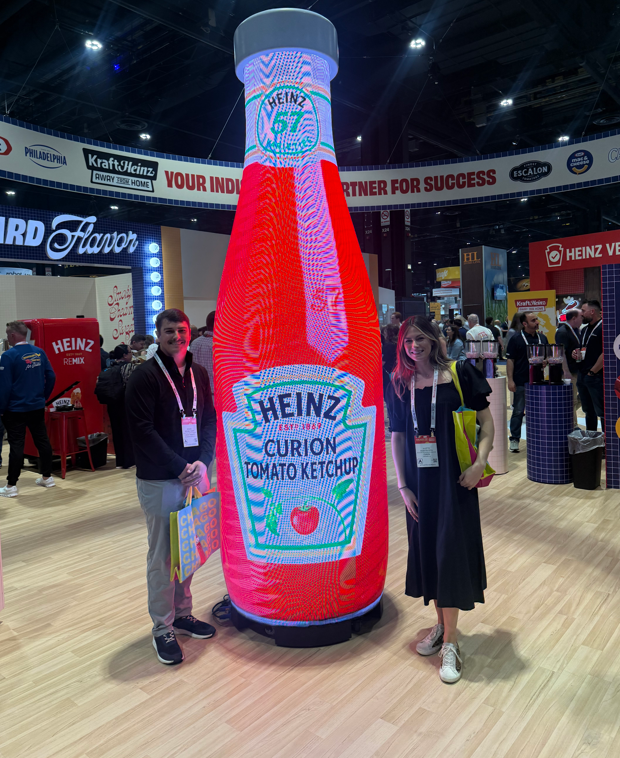
Content creators, brand podcasts, social-first marketing teams, and live storytelling activations were highly visible across the show floor. Restaurants and food brands are increasingly recognizing that visibility and emotional connection are just as critical as product quality.
This evolution signals a broader shift in how brands think about growth. It is no longer enough to simply serve great food, brands must now actively shape narratives, build communities, and engage consumers across multiple digital touchpoints.
The restaurant of today is also a media brand.
Shifting Food & Beverage Trends
From a product perspective, the show reflected noticeable changes in consumer demand and innovation priorities.
One of the most significant observations was the reduced emphasis on plant-based meat alternatives compared to previous years. In their place, there was a stronger focus on:
- Protein-forward product innovation
- Beverage creativity and experimentation
- Indulgence-led offerings
- Globally inspired flavors and formats
Functional beverages were especially prominent, alongside rising interest in boba, matcha, and increasingly, THC-infused concepts. Cold foam applications, chili crunch variations, international desserts, and premium ice cream offerings also drew significant attention.
The direction of travel is clear: consumers still want novelty, but they are gravitating towards products that feel more authentic, culturally rooted, and sensorially indulgent. The emphasis is less on restriction and more on experience.
Balancing Innovation with Authenticity
Overall, the 2026 National Restaurant Association Show reinforced just how quickly the foodservice landscape is evolving.
The event provided an invaluable opportunity to connect with clients, explore emerging brands, and hear directly how operators are rethinking the future of their businesses.
What became clear throughout the show is that the businesses best positioned for success will be those that can strike a careful balance: innovation with authenticity, and operational efficiency with meaningful guest experience.
Technology will continue to accelerate transformation across the sector, but the winners will be those who remember that hospitality remains at the heart of it all.