
Authored by Kristen Kelly, Director, Strategic Insights, Curion
A favorite foundation suddenly doesn’t spread quite the same. A moisturizer feels heavier. A product that once disappeared effortlessly into the skin now leaves a different finish. Consumers may not know exactly what changed in the beauty formulation… but they often know when something feels different.
And as major brands prepare for another wave of beauty reformulation driven by evolving global ingredient regulations, maintaining that familiar consumer experience may be just as important as achieving compliance.
Why Beauty Reformulations Are Necessary
One regulatory change bringing reformulation into sharper focus is Commission Regulation (EU) 2024/1328, which introduces new restrictions on certain cyclic silicones commonly used in cosmetic formulations. Beginning June 6, 2027, the regulation will restrict the use of cyclopentasiloxane (D5) and cyclohexasiloxane (D6) in leave-on cosmetic products sold in the European Union to concentrations below 0.1%. The restrictions are driven by environmental concerns related to the persistence and bioaccumulation of these substances.
For beauty brands, compliance may mean reformulating products consumers have known and used for years. D5 and D6 have been valued in cosmetic formulations for the sensory properties they help provide, including spreadability, a lightweight or silky feel, and a smooth application experience. Replacing them isn’t simply a matter of swapping one ingredient for another; formulators must work to preserve the characteristics consumers associate with the original product.
When Beauty Reformulation Changes, Do Consumers Notice?
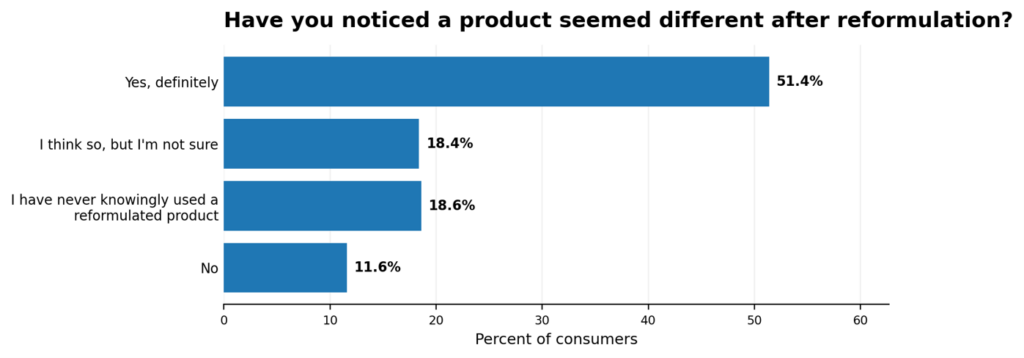
In a recent Curion Poll PULSE survey, 51% of consumers said they had definitely noticed a difference in a skincare or makeup product they regularly use after it was reformulated. Another 18% believed they had noticed a difference. In other words, consumers don’t need to know what changed in the formula to recognize that their product experience has changed.
What Consumers Notice First In Beauty Reformulation
Noticing that a product has changed is one thing. Understanding what feels different is where the story becomes especially important for beauty brands.
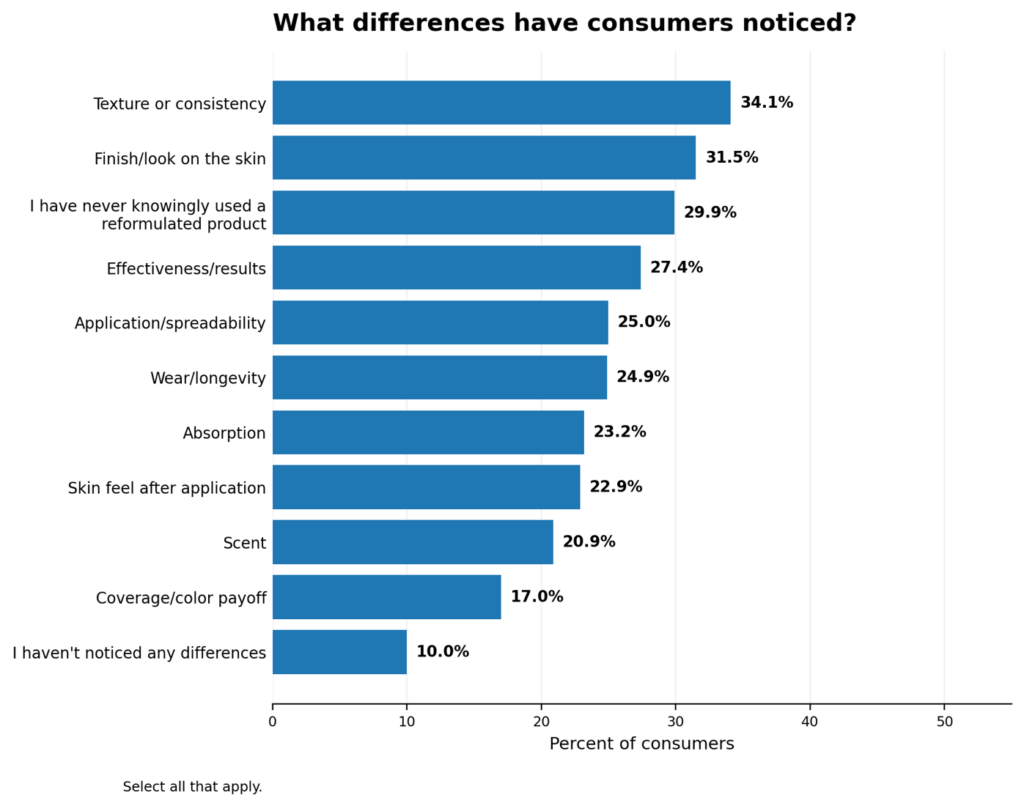
When consumers were asked what differences they had noticed in reformulated skincare or makeup products, texture and consistency rose to the top at 34%, followed closely by finish or look on the skin at 32%. Effectiveness/results (27%), application and spreadability (25%), and wear/longevity (25%) were also among the most frequently reported differences. Consumers also pointed to changes in absorption, skin feel, scent, and coverage or color payoff.
A Difference Doesn't Automatically Mean Rejection
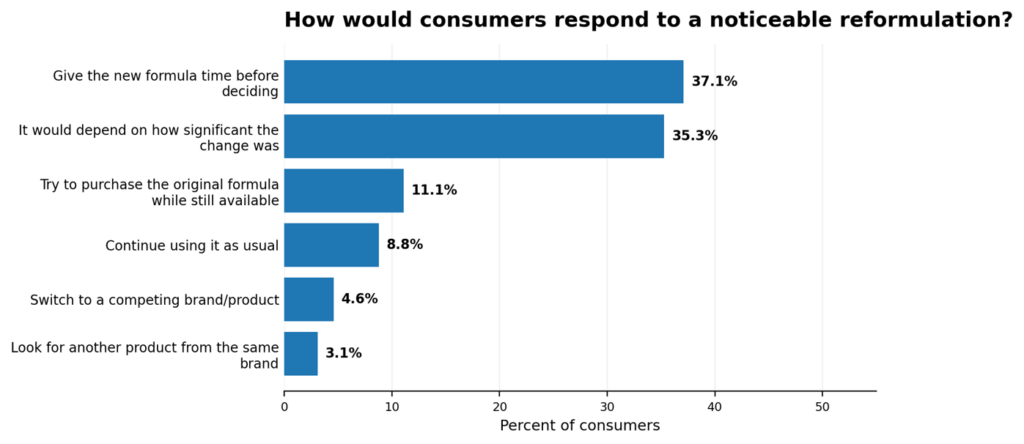
But noticing a difference doesn’t necessarily mean consumers will reject the new formula. When asked how they would respond if a regularly used beauty product were reformulated and they noticed a difference, 37% said they would give the new formula time before deciding, while 35% said their reaction would depend on how significant the change was. Only 5% said they would immediately switch to a competing brand or product.
Performance Remains The Guardrail
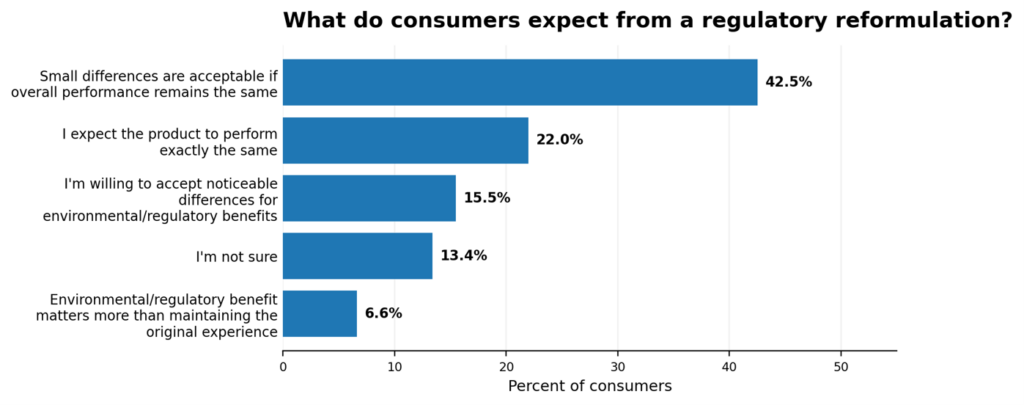
Consumers showed some willingness to accept change, but not at the expense of the overall product experience. Forty-three percent said small differences are acceptable as long as overall performance remains the same, while another 22% expect a reformulated product to perform exactly the same. Together, nearly two-thirds of consumers either expect identical performance or will accept only small differences as long as overall performance is maintained.
The Layering Effect: When Small Changes Add Up
There is another consideration for brands: consumer tolerance shouldn’t necessarily be evaluated one reformulation at a time.
In product development, “salami slicing” describes a series of small, incremental changes that may be acceptable individually but become meaningful when experienced cumulatively. In beauty, we might think of this as The Layering Effect.
A change to texture may fall within consumers’ tolerance zone. So might a subtle shift in absorption, finish or scent. But layer enough individually acceptable changes together—or make successive reformulations over time—and the product experience can eventually drift away from what consumers originally loved.
Can The Finished Experience Still Feels Like The Same Product?
That is the bigger business question: How much can a formula change before it changes what consumers love about the product?
By bringing consumers into the reformulation process early, brands can identify which characteristics are most important to preserve, where a new formula differs, whether those differences are noticeable, and which fall within an acceptable tolerance range. Sensory and product experience research, difference testing, qualitative exploration, and current-user research can inform development, with alienation and acceptance testing helping validate the formula as it moves toward launch.
Regulatory Reformulation May Be Unavoidable, But Consumer Alienation Doesn't Have To Be.
The best time to understand consumer tolerance isn’t after launch. It’s during formulation. Drawing on thousands of consumer studies across beauty and personal care, Curion helps brands prioritize reformulation decisions, optimize product experience, and move forward with confidence.