
Authored by Isabelle Huang, Associate Director, Strategic Insights
87% of Gen Z choose food brands that source ingredients from their origin country and honor cultural history over ones that just chase the trend. See why fast-moving flavor fads like Dubai chocolate and matcha fall flat without cultural relevance, and what it takes to build lasting brand loyalty.
I’m making my usual grocery runs at my local supermarket, club store, and family-owned specialty foods store. After hauling into the cart several items I don’t really need, at the checkout line an interesting treat catches my eye. A year ago, I might have picked it up and pondered whether the additional $15 for this unknown-to-me confectionary was worth it or not. Nowadays, I’m bombarded with copycats left and right no matter what retail channel I’m shopping at and often don’t give the 3 or 4 variations before me a second thought.
The Rise of Viral Food Trends
As a food enthusiast who uses social media from time to time, it was almost impossible to not have heard about this trend that seemed to take CPG and even QSR and FSR by storm.
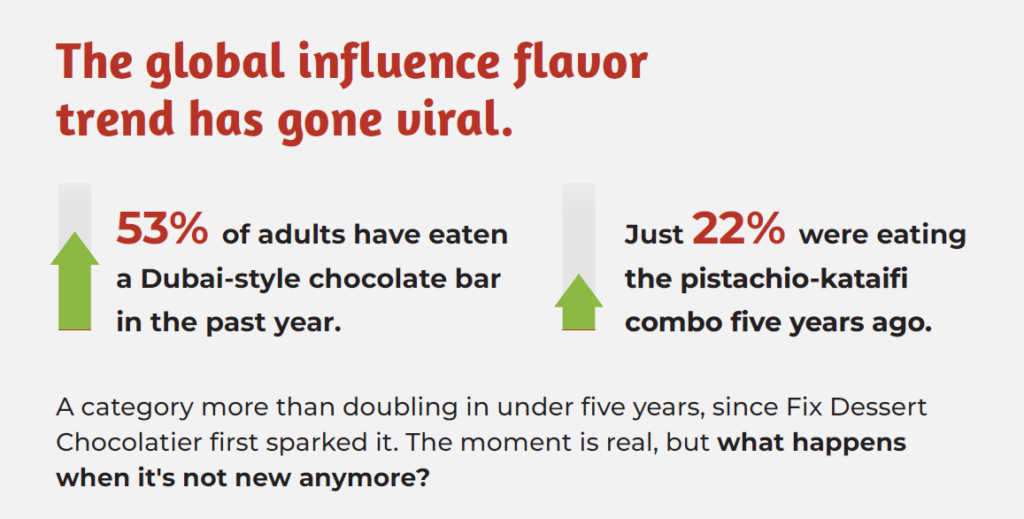
Of roughly 15,000 surveyed unique adults, over 50% had a “Dubai style” chocolate bar in the past year, compared to only 20% having consistently eaten treats with similar ingredient combinations of chocolate, pistachio, and kataifi or other forms of crisped phyllo in the past five years, when Fix Dessert Chocolatier first created the product and gained viral recognition in the years following. The current numbers only increase when considering those who may have eaten “Dubai style” inspired flavors in other formats from ice cream, shakes, and supermarket cake.
For businesses weighing decisions on whether to jump onto this viral food train, this may sound like great news, as it seems like this trend is here to stay. I ask these brands to take a pause and consider, 1) In an already saturated market, how can I stand out, particularly in generating interest with the other 50% of the population? 2) How can I project long-term gains when a “trend” becomes “mainstream”, ensuring the benefits outweigh the cost of “trend-hopping”?
Cultural Authenticity in Food Trends Starts With the Product
The key to both might sound obvious—have a better product. But the product is not just the taste of the finished good, it’s the story of how it first materialized, where it’s coming from, how it’s produced, and how you position it.
This can be particularly true for global foods in the U.S. 72% of Millennials to Boomers have had boba milk tea in the past year, 68% matcha, and 35% chili covered candy, compared to 20%, 19%, and 12% who mention they have been consistently having these items in the past 10 years. In another decade, the youngest of Gen Z, drivers of flavor exploration, will find themselves with key purchasing power. It’s no surprise that brands are hungry to target them, and many see social media outlets and influencers as their buy-in. But they’ll need to think more critically for long-term success.
Trend-Forward vs. Cultural Stewardship: Two Brand Models
When considering whether to engage in viral trends, especially when global flavors are in play, often brands take one of two approaches:
Trend-forward model: Chases viral flavor, minimal sourcing transparency, uses substitutes, no cultural framing.
Cultural-stewardship model: Maintains ethical sourcing, discloses origin, educates consumers on heritage, partners with originating producers or experts.
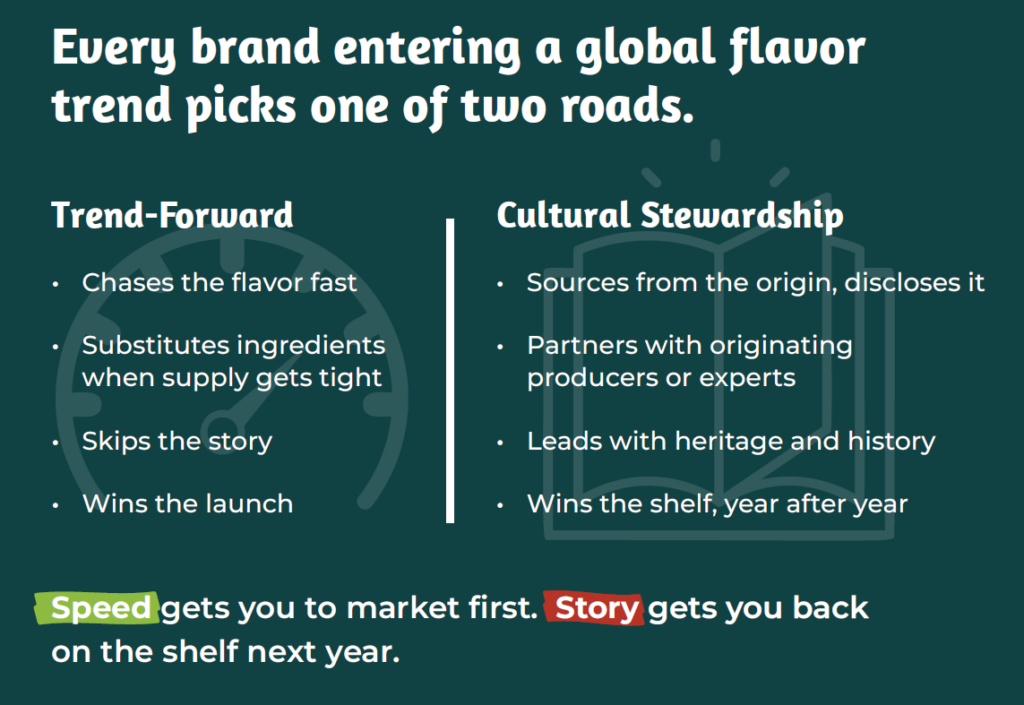
Leaning on the momentum of the trend means you can be faster to market and outpace the competition. However, you risk shallow consumer trust, backlash from cultural diaspora, and waning interest over time against brands who follow the culture-model, a slower but more durable way to build brand equity and defense against criticism.
What Gen Z Wants: Authentic Sourcing Over Aesthetics
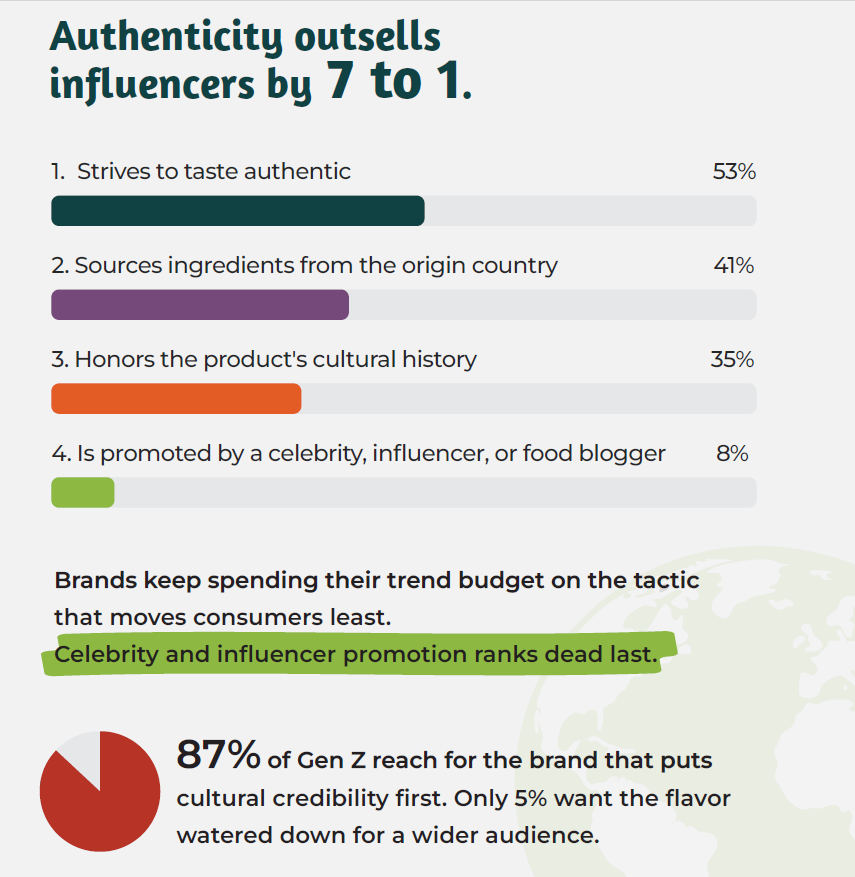
Among those surveyed, 87% of Gen Z are most likely to reach for a brand that puts cultural acknowledgements first, by sourcing ingredients from the origin country as a highlight of quality, honoring the history of the product while layering in their own storytelling, and striving to taste authentic. Meanwhile only 5% of Gen Z and 8% of all surveyed adults mention they’d rather brands sacrifice authenticity to make themselves more palatable to a wider audience.
That said, maintaining authenticity and sourcing integrity can be a real challenge. Brands often face the dilemma of shifting supply chains, obstacles that the average consumer is not in tune with or knows the crisis but still expects delivery on product promise. Often these challenges are fueled by the dozens of brands looking to capitalize quickly and pockets of skyrocketing demand, with The Guardian reporting just last year on the pistachio shortage resulting from the “Dubai Style” chocolate trend.
Why Trend-Forward Brands Lose Long-Term
While it may be tempting to shift towards the “trend-forward model”, this path is not as sustainable. You might receive short-term gains from the 30% of consumers who mention reaching for a product just to try it, which can work well if you’re viewing the next trend as an LTO. But when those trends become sustained and mainstream, you are more likely to gain long-term stability with the 58% who investigate the product to understand more about its background or cultural origins, or those specifically researching and trying brands that are most authentic. Brands investing in cultural and emotional investment will benefit over those who skip over this crucial first step.
Separately, the “trend-forward” path is also less sustainable when it comes to sourcing, may lead to repercussions against other commodities, and “being cancelled” by communities with cultural ties. With the matcha boom, centuries old tea shops like Ippodo Tea have put out PSAs on not only the increased pricing for their teas but also impacts to production and availability of other tea varieties in Japan to meet the matcha demand. One Filipino community group spotlights the surge for ube, or purple yam, and the dilution of cultural meaning as brands look for ingredient substitutes just to meet the viral aesthetics.
Building a Brand That Lasts: 4 Keys to Cultural Authenticity
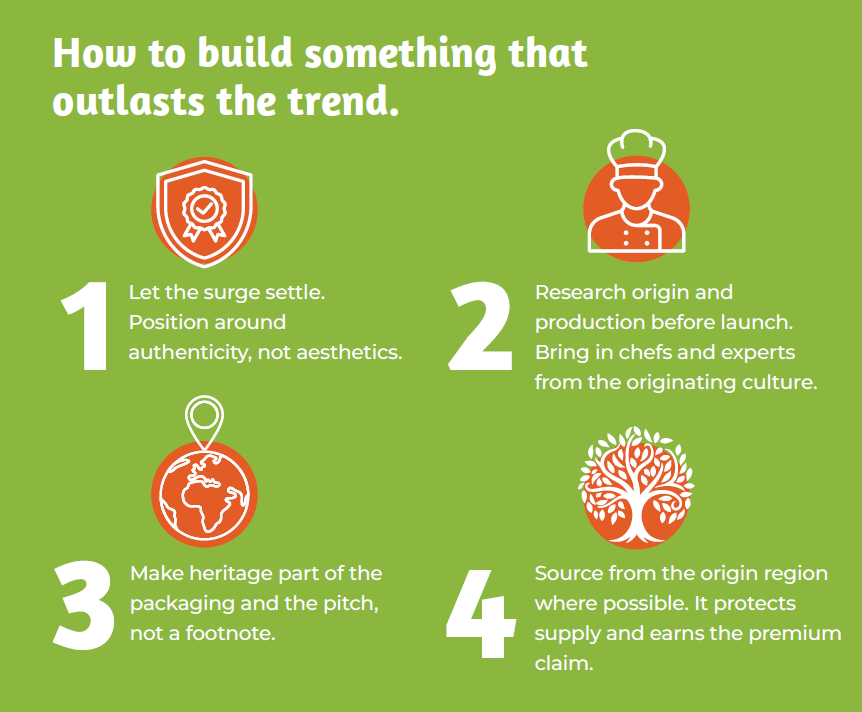
So how can a brand work on building something durable? Consider the following:
- Invest in your long-term consumer. Allow the surge to settle and position your brand as one that values authenticity over aesthetics.
- Research the origin and production methods thoroughly before launch. Consider bringing chefs and experts from the originating culture during innovation stages.
- Harness the power of packaging and marketing, highlighting heritage story as a value-add.
- Source ingredients from the origin region where feasible, which also strengthens supply chain and premium claims.
Global flavor trends are a growth engine — the brands that win long-term are the ones that pair trend velocity with authentic sourcing and storytelling. A year from now, when I’m at the checkout shelf, I hope to see a brand that’s really adopted that narrative, one that might make me stop and consistently reach for a $15 bar of chocolate.