Events & News

Scentmaxxing Isn’t New, the Internet Just Finally Gave It a Name!

Authored by Tara Biuso, Director, Strategic Product Insights

Drawing on responses from more than 22,000 consumers, new research shows that scentmaxxing, the viral term for intentional fragrance and hygiene routines, is really just decades-old scent behavior with a new name. What do fragrance and personal care brands need to know about ownership habits, purchase influence, and spending across generations to earn a place in consumers’ daily routines?
If you’ve spent any time on TikTok or Reddit lately, you’ve probably come across the term smellmaxxing or  scentmaxxing. Like many internet buzzwords ending in “-maxxing,” it sounds like a brand-new self-improvement trend. In reality, it’s anything but.

When my Gen Alpha son asked for $200 to purchase a niche cologne label online, I asked him if he knew what it smelled like. Like a typical teen, he said: “It’s fine.” Then proceeded to tell me that if he doesn’t like the scent, he’ll just layer it with one of the other 30+  fragrances he already has. And there you have it – scentmaxxing – crafting a personal fragrance to enhance your signature aura!

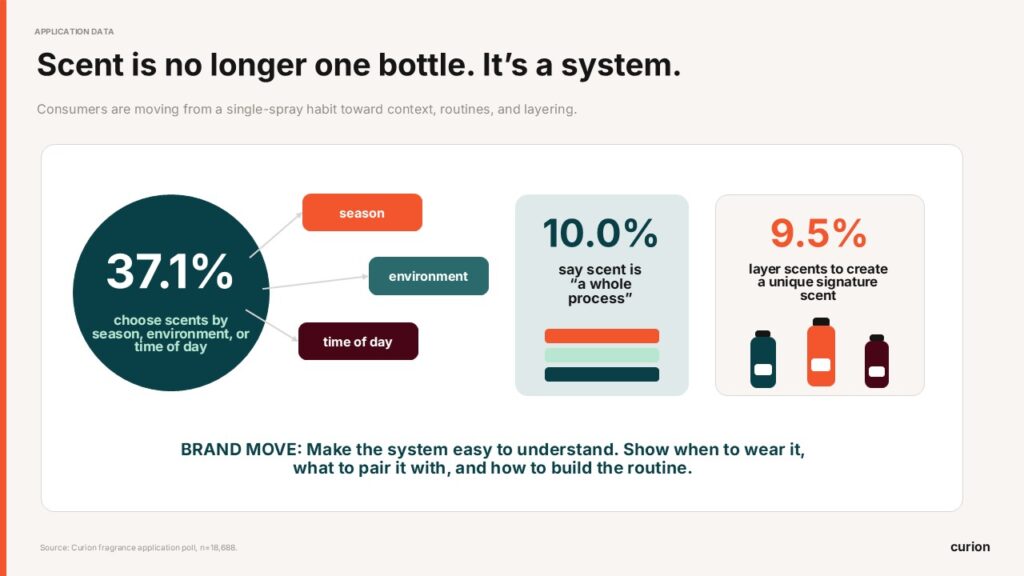
Scentmaxxing simply refers to intentionally improving the way you smell. That can mean wearing fragrance, layering scented products, maintaining good hygiene, using deodorant, moisturizing with scented lotions, or even paying attention to how your clothes and living spaces smell. It’s a holistic approach to scent rather than relying on a single bottle of cologne or perfume.

This reinforces the behavior behind scentmaxxing. It is not just spraying more cologne. It is about routines, layering, context, and personal scent management.

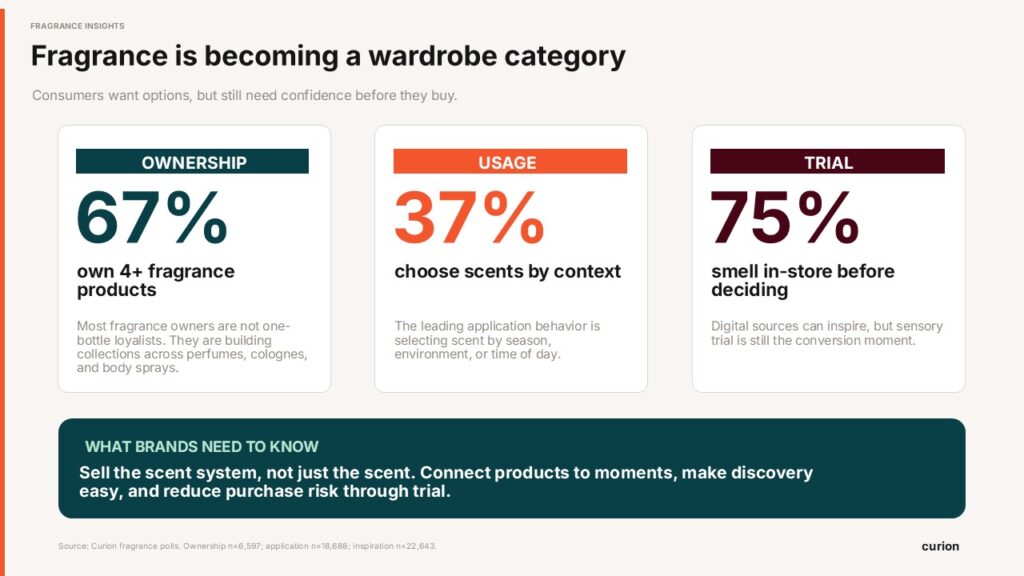
In a poll conducted by Curion with 6,600 consumers, nearly 70% reported owning four or more perfumes, colognes, and/or body sprays.

This is the cleanest proof point that scentmaxxing is not just teen internet behavior. It shows consumers already have the product inventory to rotate, layer, and experiment.

The concept has existed for decades, probably centuries. What’s new is the name.

Long before social media coined the term, people were already “scentmaxxing.” They chose signature perfumes, learned how to apply fragrance properly, stored their clothes with scented sachets, used matching body washes and lotions, and understood that smelling clean often mattered more than smelling expensive. Luxury fragrance houses have built billion-dollar businesses around the idea that scent is part of personal identity.

What changed wasn’t the behavior; it was the branding.

The internet has a habit of renaming familiar habits to fit modern self-improvement culture. “Looksmaxxing” became the umbrella term for improving physical appearance. “Sleepmaxxing” repackaged healthy sleep habits. “Scentmaxxing” did the same for fragrance and hygiene.

The new label has also expanded the conversation. Rather than focusing only on perfume, scentmaxxing emphasizes every source of personal scent. Clean laundry, fresh breath, healthy skin, hair products, deodorant, and even diet all contribute to how someone smells throughout the day. Fragrance becomes the finishing touch rather than the entire routine.

Social media has accelerated this shift by making fragrance more accessible. Instead of relying on department store salespeople, people now learn about projection, longevity, layering, and fragrance families from creators who review hundreds of scents. Affordable dupes, decants, and discovery sets have made exploring fragrances easier than ever.

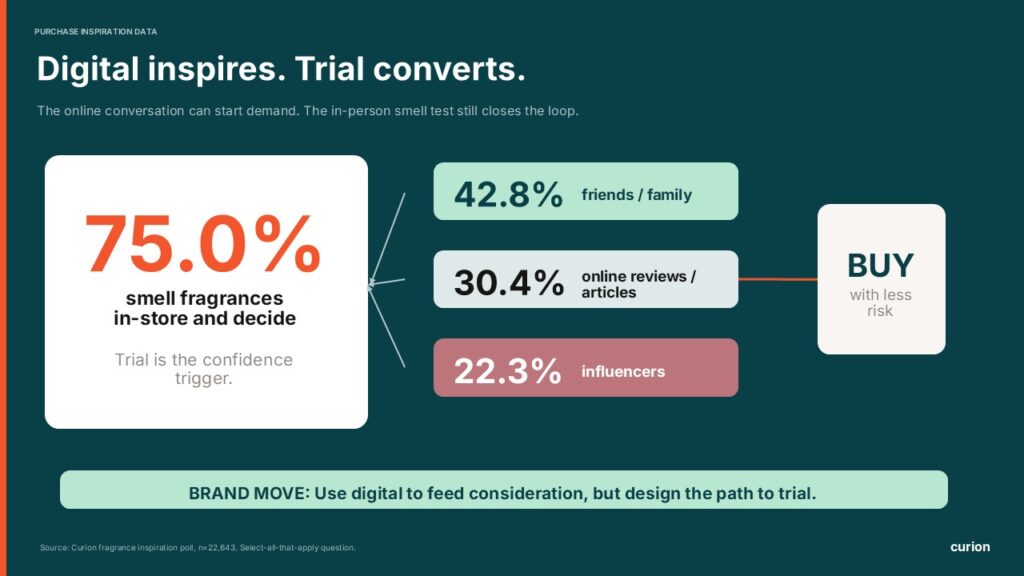
Social media matters, but fragrance still has to be experienced. Brands should not overbuild around influencer buzz if trial, sampling, reviews, and physical experience are what help consumers commit.

In a separate poll conducted by Curion, while going to the store and smelling fragrances is still popular, of the 21,000 fragrance users polled, more than 50% reported getting recommendations or inspiration for their fragrance purchases from influencers, online reviews, and articles.

At the same time, the trend reflects a broader change in how people think about grooming. Smelling good is increasingly viewed as part of overall presentation, alongside skincare, fashion, and fitness. It’s another way to express personality and leave a memorable impression.

Of course, scentmaxxing doesn’t require spending hundreds of dollars on niche fragrances. In many cases, good hygiene, clean clothes, and a well-chosen everyday fragrance outperform an expensive perfume sprayed over poor grooming.

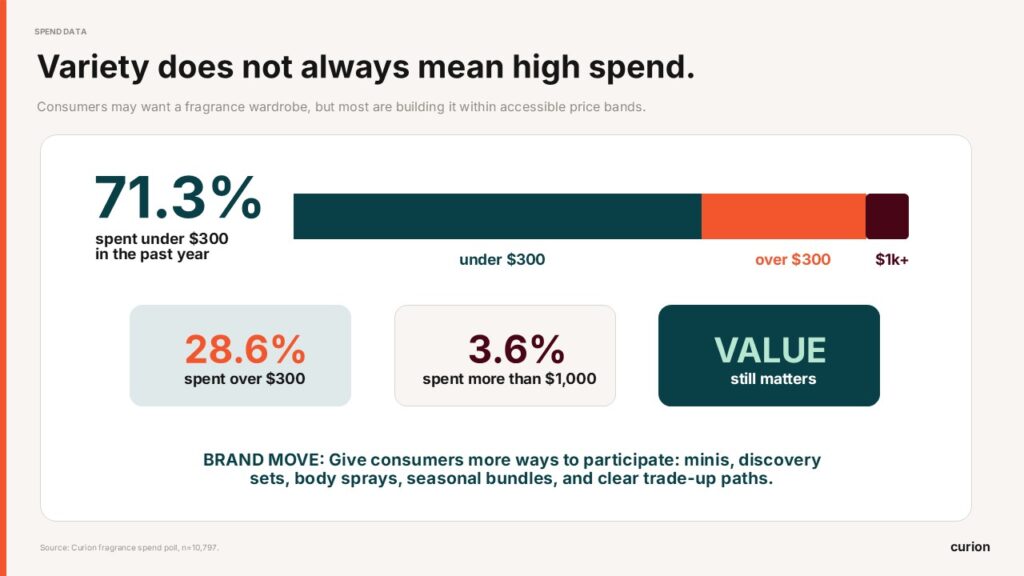
Out of 11,000 consumers surveyed, just under 30% reported spending over $300 this past year on perfumes, colognes, and body sprays for themselves.

Consumers may want variety, but many are not buying only luxury fragrance. That supports minis, body sprays, discovery sets, seasonal bundles, dupes, and accessible premium formats.

In the end, scentmaxxing isn’t a revolutionary discovery. It’s an old practice wrapped in new internet language. People have always cared about smelling pleasant; today’s generation simply gave the habit a catchy name, built an online community around it, and turned it into another branch of self-improvement culture.

To the brands embracing the scentmaxxing movement: don’t overlook the rest of us.

Millennials, Gen X, and Baby Boomers have been building fragrance collections, layering scents, and investing in quality personal care long before the term “scentmaxxing” ever appeared on social media. We may not use the latest internet buzzwords, but we’ve been living the lifestyle for years.

If companies want scentmaxxing to be more than a passing social media moment, they should market beyond the algorithm. Great fragrances don’t have an age limit, and neither do the people who enjoy them.